
Databricks Unity Catalog Implementation
Our Databricks Unity Catalog Implementation Solution offers organizations a comprehensive approach to unify data governance and maximize the value of their data assets. This solution provides significant business value by enhancing data security, improving data discovery, and streamlining compliance efforts across your lakehouse.


One platform to unify all your data, analytics, and AI workloads.
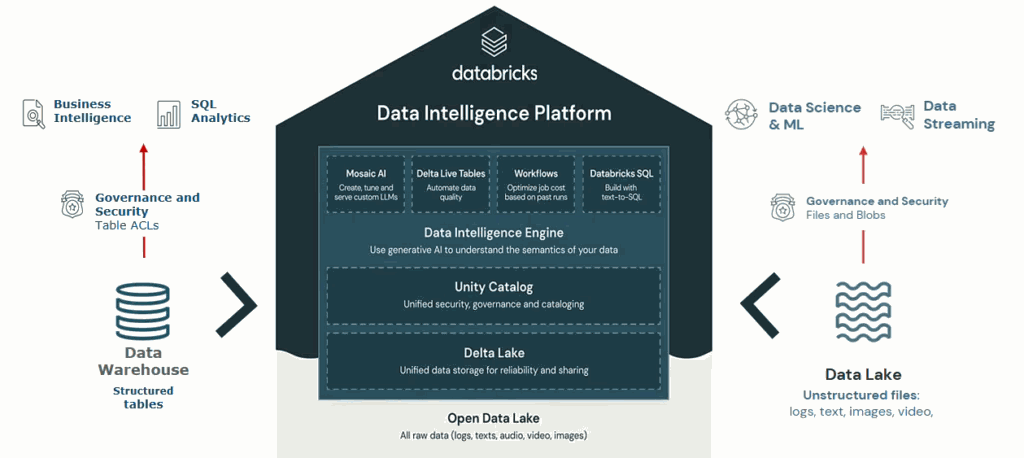
How Unity Catalog solves each business problem.
Access controls
Implement fine-grained access controls and centralized governance to protect sensitive data assets. Unity Catalog offers a single place to administer these data access policies that apply to the entire organization.
Data discovery
Unity Catalog lets you tag and document data assets, and provides a search interface to help data consumers find data. This is possible across structured and unstructured data, ML models, notebooks, and dashboards.
Governance and compliance
Unity Catalog’s robust permissions, lineage tracing, and tagging capabilities can be used to support and enforce data privacy and regulatory compliance-related governance policies.
Data auditing
Unity Catalog automatically captures user-level audit logs that record access to your data. Unity Catalog also captures lineage data that tracks how data assets are created and used across all languages.
A proven approach, adapted to your complexity.
Infinitive tailors its proven Unity Catalog approach to clients’ unique needs, adapting it according to complexity and enterprise requirements.
- Gather requirements
- Run assessment
- Review results
- Tailor migration plan
- Account-level setup
- Architecture design
- Create metastore
- Create catalog and schemas
- Sync legacy metadata
- Upgrade tables and views
- Create access controls
- Validate objects
- Test access controls
- Prep go-live plan
- Production migration
- Documentation handoff
- Project close
Get started. Speak with a Databricks expert.
Bring your current governance, access, and compliance requirements. We’ll help plan a Unity Catalog implementation that fits your complexity.